Oilstone vs Diamond Plate for Vintage Molding Plane Irons
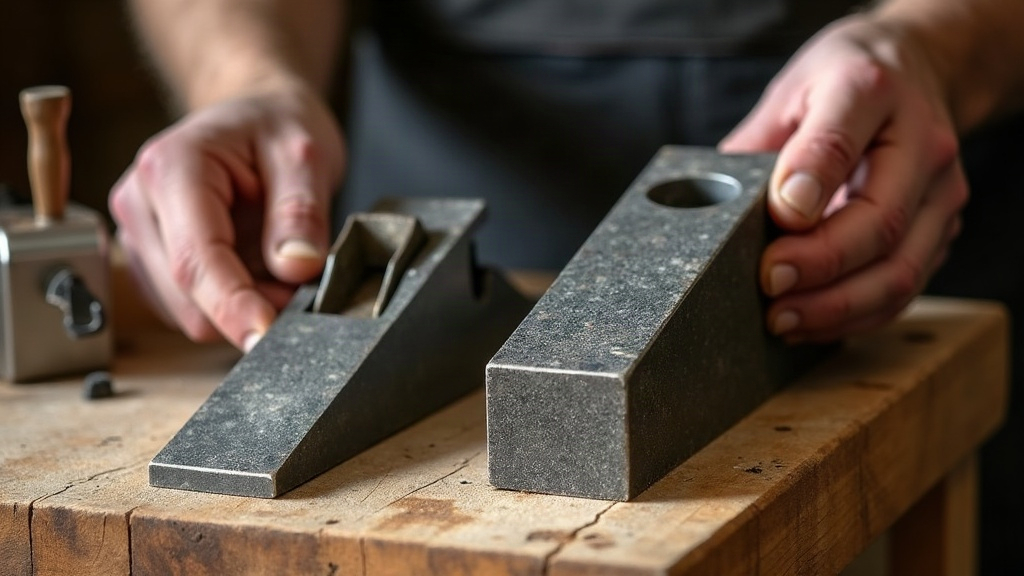
If you work on vintage molding plane irons, the oilstone versus diamond plate question really comes down to three things: the steel you’re dealing with, the shapes you need to sharpen, and whether you’re chasing speed or control. Diamond plates cut fast and shrug off the harder, often irregular steel you find in old irons, and they won’t dish on you. Oilstones, particularly fine Arkansas stones, give you that smoother, more polished edge that a lot of turners and molding plane users swear by for the final pass. Honestly, most restorers who’ve been at this a while end up using both: diamond to flatten and shape, oilstone to finish.
Why Molding Plane Irons Are Different
Vintage molding plane irons aren’t your typical flat blade. They carry complex profiles, ogees, beads, coves, reverses, often filed by hand or shaped on a grinder generations ago. That history changes how you should pick a stone:
- Steel hardness varies widely. Irons from before 1900 were frequently hand-forged with inconsistent carbon content and uneven hardening. Sharpen one spot and it goes fast; move an inch over and suddenly it feels glassy hard, like the steel changed its mind.
- Shaped edges need slipstones. A flat bench stone won’t get you into a cove or around a bead. You need teardrop, round, or triangular slips shaped to match.
- Pitting and rust scars show up constantly on tools pulled from flea markets or old chests. Before you even think about fine honing, you’re often grinding away corrosion damage first.
Oilstones: The Traditional Choice
Oilstones, whether natural (Arkansas, Washita) or synthetic (India, Crystolon), have anchored molding plane work for well over a hundred years. There’s a reason for that staying power.
Pros:
- They produce a genuinely fine, near-mirror polish on the bevel, especially hard black or translucent Arkansas stones.
- The cutting action feels gentler and easier to control, which matters a lot on narrow profile edges where one slip ruins your morning.
- Slipstones made from oilstone material come in just about every shape a molding plane iron could demand.
- No water near old wooden stocks that really shouldn’t get soaked.
Cons:
- They’re slow. If your iron is pitted or badly rounded over, an oilstone alone will test your patience.
- Softer stones dish and glaze with use, especially against steel that feels unusually hard.
- You need honing oil, and that oil has a way of creeping into wooden plane bodies if you’re careless with it.
Diamond Plates: The Modern Workhorse
Diamond plates are exactly what they sound like: a metal or resin plate studded with industrial diamond particles, sorted by micron size.
Pros:
- They chew through hard or case-hardened steel fast, and that’s common on old molding iron edges that got re-tempered at some point in their history.
- They stay flat. No dishing, period, which matters when you need a reliably flat back on the iron.
- Diamond slip files and cone-shaped diamond rods cover coves and beads just like oilstone slips do.
- They run on water, so there’s zero oil risk near old wood or japanning.
Cons:
- Coarser plates (325 to 600 grit) can leave a scratch pattern that’s a bit rough, meaning you’ll need a finer stone afterward to clean it up.
- They do slow down as they wear, just far less dramatically than an oilstone dishes.
- A full grit range, coarse through extra-fine, costs more upfront than a basic oilstone setup.
Which One Should You Use?
Here’s a workflow a lot of restorers settle into:
- Flatten and repair with diamond (325-600 grit). Knock out the pitting, re-establish the bevel, flatten the back, and do it quickly.
- Refine with a medium diamond or India stone (1000-1200 grit). Tighten up the scratch pattern before you move to final honing.
- Polish with a fine or translucent Arkansas oilstone (roughly 4000-8000 grit equivalent). This step is where the edge actually gets sharp, where you get that glassy finish that holds up in end-grain and figured wood.
- Pull out matching slipstones (oilstone or diamond) for internal curves like coves and ogees, since no flat stone reaches in there.
If budget or shelf space only allows for one system, go diamond. It covers heavy repair and moderate finishing both, and it never wears out of flat. But if your irons are already in reasonable shape and you’re mainly doing maintenance honing, a good fine oilstone plus a handful of shaped slips does the job, and gives you a better polish for less money per stone.
Common Mistakes to Avoid
- Don’t stop at a coarse diamond plate and call it sharp. That edge dulls almost immediately.
- Don’t try to “fix” a dished oilstone by soaking it in more oil. It won’t flatten itself. Lap it flat on a diamond plate or on sandpaper taped to glass.
- Don’t jam a slipstone into a profile at the wrong angle. Follow the existing bevel, don’t fight it.
Conclusion
For vintage molding plane irons, diamond plates win on speed, flatness, and dealing with unpredictable old steel. Oilstones win on polish and feel, especially once you bring shaped slips into the mix. If you’re serious about restoration, run both: diamond for the repair and shaping stage, fine oilstone for that final pass that actually makes the edge sharp.