Springtime Wood Movement: Fixing Sticky Oak Drawer Fronts
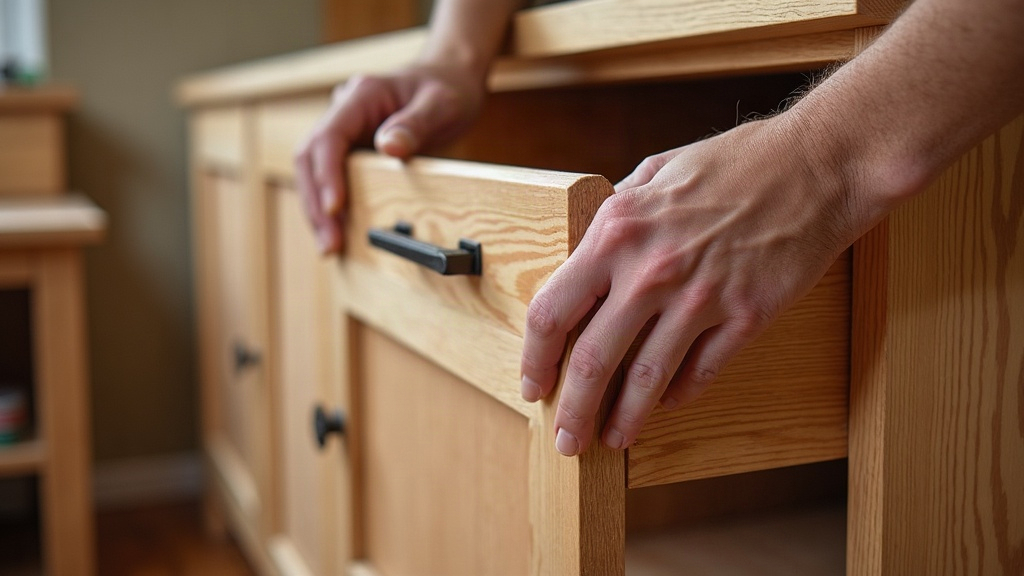
If your solid-oak drawers have started sticking now that the weather’s warming up, don’t panic and don’t reach for a plane. Nine times out of ten it’s just seasonal wood movement, not a broken drawer. Oak drinks up moisture as spring humidity climbs, swells across the grain, and suddenly the fit inside the cabinet frame feels a size too small. The good news is you can almost always fix this without touching the drawer front, which is exactly what you want to avoid since planing it down wrecks the reveal (that neat, even gap around the drawer face) for good.
Why Solid Oak Swells in Spring
Solid oak gets chosen for its character and strength, but that same “realness” makes it moody about moisture. It’s a living material, not an engineered one like plywood or MDF, so it breathes, expands and contracts with the seasons whether you want it to or not.
- Humidity rises in spring. Outdoor moisture climbs, heating systems shut off, and indoor relative humidity can jump 15-20% almost overnight.
- Wood swells across the grain, not along it. So drawer fronts and sides puff out slightly while the length barely changes at all.
- Tight joinery has nowhere to go. Well-made furniture with a reveal of just 1.5-3mm doesn’t leave much room for the wood to expand into.
Here’s the thing: this swelling is temporary. By autumn, most drawers loosen right back up as humidity drops. Which is precisely why grabbing sandpaper in March is usually the wrong move.
Diagnose Before You Touch a Tool
Before you do anything, make sure you’re actually dealing with moisture movement and not something else entirely.
- Check the timing. Did this start right around the season change, or after a stretch of damp weather?
- Feel for uniform tightness. Genuine swelling binds evenly across the top and sides of the drawer opening. If it’s only jamming in one corner, that’s a different story.
- Rule out mechanical issues. Loose runners, a warped bottom panel, or wax that’s dried out on the slides all need their own fix, not a humidity fix.
If the drawer got tight suddenly, evenly, and in step with the season, you’re almost certainly looking at wood movement, not a structural fault.
Fixes That Don’t Touch the Reveal
1. Reduce Indoor Humidity First
Sometimes the fix has nothing to do with the wood itself, just the air around it.
- Run a dehumidifier in the room for a few days and aim for 40-50% relative humidity.
- Keep furniture away from windows, radiators, and damp exterior walls.
- Be patient, give it 3-5 days. Oak moves slowly, so don’t rush in with sandpaper on day one.
2. Lubricate Contact Points
Honestly, a lot of “stuck” drawers aren’t stuck at all, they’re just swollen enough that friction has gone up a notch.
- Rub paraffin wax, beeswax, or even an old candle stub along the runners and the side edges that contact the cabinet frame.
- Skip silicone sprays on bare wood. They can stain the timber or turn into a dust magnet down the line.
- Work the drawer in and out several times so the wax actually burnishes into the wood at the friction points.
3. Ease Contact Only Where It Rubs, Not the Face
If wax and a dehumidifier haven’t solved it, find the exact rub points first. Rub a bit of carbon paper or chalk dust onto the runners, slide the drawer in and out, then pull it and see where the marks transferred. Ease only those internal contact edges with fine 220-320 grit sandpaper.
One rule you cannot break: never sand or plane the visible front face or its edges. The reveal depends entirely on the front’s outer dimensions. Shave even a hair off there and you’ve ruined the sightline permanently, no going back once humidity drops in autumn.
4. Wait It Out When Possible
If the drawer is just tight, not jammed shut, and it’s still early spring, sometimes the best fix is doing nothing. Plenty of oak furniture sorts itself out within a few weeks once humidity settles.
When Planing Might Actually Be Necessary
Planing only makes sense if:
- The drawer has stayed tight across multiple seasons, which points to real moisture damage or warping, not ordinary swelling.
- You’ve confirmed indoor humidity is stable and the drawer is still sticking anyway.
- A professional or an experienced woodworker has actually looked at it and confirmed the frame has shifted, not just the surface of the wood.
Even in that case, take off tiny amounts, under 0.5mm per pass, and only on hidden contact edges. The show face stays untouched, always.
Final Thought
A sticky solid-oak drawer in spring is almost always a temporary side effect of the wood doing what wood does, not a defect that needs aggressive correction. Start small: control the humidity, add some wax, and only ease the hidden contact points if you really have to. Leave the reveal alone and your furniture keeps its proportions and craftsmanship intact. Give it a season, and more often than not, the problem quietly fixes itself.