Quarter-Sawn Sycamore for Humid-Bathroom Vanity Door Panels
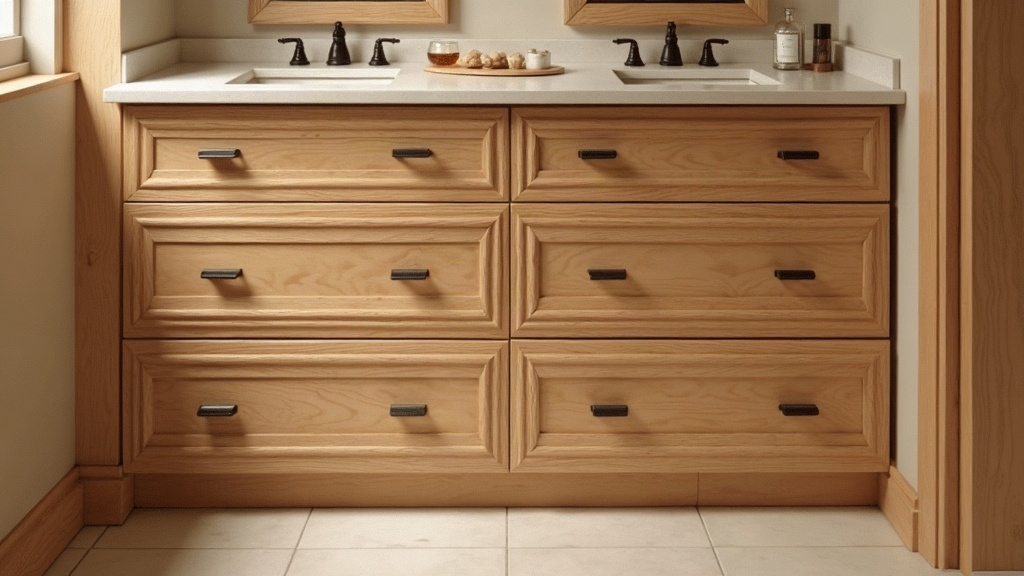
Quarter-sawn sycamore can be a genuinely striking choice for bathroom vanity door panels. That rare “lace” figure catches the eye in a way few hardwoods can match. But it’s not a wood you just slap a coat of finish on and walk away from. It needs careful finishing and real construction detailing if it’s going to survive daily humidity swings without falling apart on you. Here’s what actually matters when you’re deciding whether it belongs in a wet room.
Why Quarter-Sawn Sycamore Stands Out
Sycamore (Platanus occidentalis in the US, Acer pseudoplatanus, often just called “sycamore” or “plane” in Europe) is a pale, fine-textured hardwood that doesn’t shout for attention on its own. Quarter-sawn, though, is a different animal. The growth rings run nearly perpendicular to the board face, and that orientation exposes broad, irregular ray flecks that shimmer almost like mother-of-pearl under the right light. Compare that to flat-sawn (plain-sawn) sycamore, which gives you plain, fairly straight grain and nothing close to that lace effect.
On a vanity panel, that figure practically reads as a natural inlay. No two panels ever come out looking the same, and for custom or high-end bathroom builds, that’s a big part of the appeal, honestly probably the whole reason someone specs it in the first place.
Dimensional Stability: The Real Reason to Quarter-Saw
Let’s be blunt: bathrooms are brutal on wood. A hot shower can push relative humidity to 80-90% within minutes, then the fan kicks on and it drops right back down. Do that twice a day, every day, for a few years, and wood that moves a lot will start showing it:
- Panel cupping or bowing
- Cracked or “starved” finish at the joints
- Doors that no longer close flush
- Visible gaps where panels meet the frame
Quarter-sawing helps because it cuts down width movement noticeably compared to flat-sawn lumber of the same species. The ring orientation shifts most of the shrinking and swelling into the thickness of the board rather than its width. Sycamore isn’t the most stable species to begin with, it has moderate movement values on its own, but quarter-sawing is what keeps a wide panel from warping into something resembling a rocking horse after a couple of humid summers.
Just don’t mistake this for zero movement. Quarter-sawn stock still moves, it’s just more even and more predictable about it. The door construction still has to plan for that.
Construction Details That Make or Break the Panel
- Use a floating or frame-and-panel design, never a solid slab glued rigidly into a frame. A properly floating panel can expand and contract inside its groove without tearing the finish or cracking down the middle.
- Leave expansion clearance, usually 1/8” to 3/16” around the panel edge depending on width. Yes, even with quarter-sawn stock. Skip this and you’re asking for trouble.
- Balance the panel by finishing both faces the same way. Seal only the show side and you’ll watch the door slowly cup toward the sealed face as humidity cycles through the seasons.
- Avoid single boards wider than roughly 8-10” without a breadboard or torsion-box backing. Glue up narrower quarter-sawn boards instead. It’s more labor, but it buys a lot of stability.
Finishing for Bathroom Conditions
A light oil rub or bare wood simply won’t cut it near a shower. Here’s the approach that actually holds up:
- Seal all six sides of every panel piece before assembly, edges included, and don’t forget the inside of any grooves.
- Reach for a catalyzed conversion varnish, marine-grade polyurethane, or a two-part epoxy-based finish instead of a wipe-on oil. Oil does gorgeous things to sycamore’s figure, no argument there, but its moisture-vapor resistance just isn’t in the same league.
- Plan on 3 to 4 coats, sanding lightly between each. Bathroom panels take more abuse from splashes, toothpaste, and cleaning sprays than a kitchen cabinet door ever will.
- Budget for reapplying or top-coating every few years, especially anywhere near the sink splash zone.
Where It Fits Best (and Where It Doesn’t)
Quarter-sawn sycamore vanity panels tend to work well when:
- The room has decent ventilation, an exhaust fan or a window, rather than functioning as a sealed steam box
- The panel is used as a decorative accent, say a single feature door or drawer front, rather than covering large surfaces that take direct spray
- The finish schedule is handled by someone who actually knows hardwood cabinetry, not a rushed weekend DIY wipe-on job
It’s a much weaker fit when:
- The vanity sits directly inside the shower enclosure with no real separation
- There’s no budget for professional-grade sealing (unsealed sycamore blotches and stains from moisture almost immediately)
- What you actually want is low-maintenance uniformity, in which case engineered or moisture-resistant plywood with a veneer will treat you far better
Cost and Sourcing Notes
Quarter-sawing is a specialty cut, and the price tag reflects that:
- Expect to pay more per board foot than flat-sawn sycamore, and more than common cabinet-grade hardwoods like maple or oak
- Width is limited, most quarter-sawn boards run narrower, so wider panels mean more glue-ups
- Figure quality swings a lot from log to log and mill to mill. Find a specialty hardwood supplier who’ll actually show you the boards in person, not just a stock photo of “sycamore figure.” That extra trip is worth it.
Conclusion
Quarter-sawn sycamore delivers a look nothing else really matches, that lace figure, and it holds up dimensionally far better than flat-sawn stock in a humid bathroom. But this isn’t a material you install and forget. It demands proper floating-panel construction, full six-side sealing, and a finish tough enough to fight moisture year after year. Get all that right, use it as an accent in a well-ventilated bathroom, and hire someone who knows what they’re doing with the finish, and it becomes a feature that ages beautifully rather than a recurring repair bill.