Preventing Splits When Screwing Face Frames Into MDF Cabinet Boxes
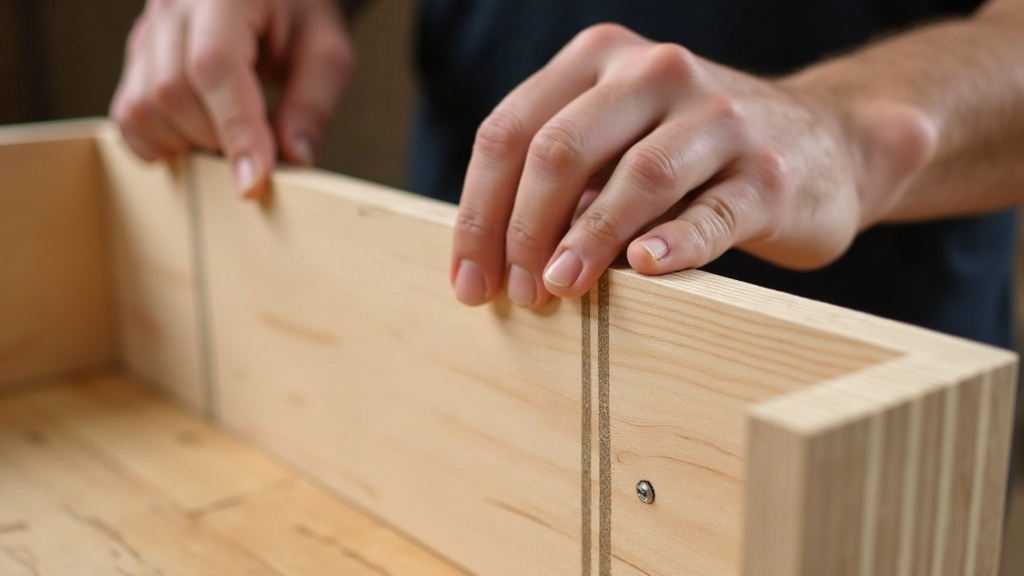
Screwing face frames onto MDF cabinet boxes splits the panel almost every time for the same handful of reasons: fasteners driven too close to the edge, screws that are oversized for the job, or someone skipping the pilot hole altogether. MDF doesn’t have long grain fibers like solid wood does, so there’s nothing to flex. It just cracks. The fix isn’t complicated, but it does require getting several small things right at once: pilot hole size, edge clearance, screw choice, and how you clamp things down. Let’s go through each one.
Why MDF Behaves Differently Than Solid Wood
Medium-density fiberboard is basically compressed wood fibers glued together with resin, with no grain direction running through it. That’s exactly why it’s so dimensionally stable and why painters love it for face frames. But that same property works against you once you start driving screws:
- No fiber flex. Solid wood bends a little around a screw shank before it ever thinks about cracking. MDF has no such give. It just fractures.
- Edges are the weak link. MDF takes screws best through the flat face, not into the edge. Edge fibers are brittle and crumble more easily than the face.
- The resin holds tight until it doesn’t. Once a crack starts, it runs fast along the panel, sometimes the whole length of a frame rail in a split second.
Once you understand that MDF has zero flex tolerance, the classic “crack right at the corner” failure makes a lot more sense, and it’s easier to avoid.
1. Always Pre-Drill, No Exceptions
Skipping the pilot hole is the number one cause of splits. Full stop.
- Size the pilot hole to roughly 90% of the screw’s root diameter (the shaft diameter, not the outer thread width).
- For a standard #8 cabinet screw, that’s about a 5/32” (4mm) bit. For #6 screws, go with 1/8” (3mm).
- Working within an inch of an edge? Size the bit up slightly. MDF is unforgiving enough that even a “correct” pilot hole can still blow out the edge under torque.
- Drill straight in, perpendicular to the face frame. Angling the bit concentrates stress unevenly and practically invites blowout.
2. Keep Screws Away From Panel Edges and Corners
If you’re going to get a split, it’ll almost always happen at a corner.
- Keep a minimum 3/4 inch edge distance from any MDF edge or corner, no exceptions.
- Stagger your screws along the frame rather than bunching several near a joint.
- At corners, nudge the fastener slightly inward rather than driving straight into the mitered or butted point.
3. Choose the Right Screw Type
Regular wood screws built for solid lumber are simply too aggressive for MDF, and they’ll chew it up.
- Go with MDF-specific or particleboard screws. Their finer thread pitch cuts cleanly instead of over-compressing the fibers.
- Skip coarse-thread deck screws. That aggressive thread strips MDF fibers rather than biting into them.
- Watch your screw length. It should only penetrate the box wall by 3/4 to 1 inch at most. Go deeper and you risk punching through the opposite face.
- For face frame work, washer-head or cabinet-head screws are worth the extra few cents. A wider head spreads out clamping pressure instead of crushing one small spot.
4. Control Driving Speed and Torque
A power driver cranked to high torque is often the real culprit, more than the screw or the hole.
- Use a drill/driver with an adjustable clutch and dial it down until the screw seats flush, no more, no less.
- Drive at a moderate, steady speed. Fast impact drivers tend to punch through MDF fibers instead of seating smoothly into them.
- The second the screw head sits flush, stop. Every extra half-turn after that compresses and cracks the fiberboard around it.
5. Clamp Before You Screw
Clamp the face frame tight to the box before you drive a single fastener. This spreads the stress out so no one screw is doing all the work.
- Use bar clamps or cauls along the length of the frame to pull it flush before fastening.
- This also keeps you from fighting gaps that force a screw to pull extra hard, which is one of the most common causes of localized splits.
- On longer frames, clamp every 12 to 16 inches so pressure stays even across the whole run.
6. Consider Glue + Screws Instead of Screws Alone
A thin bead of PVA wood glue along the mating edge, applied before you screw, adds real holding strength and takes some of the load off the fasteners themselves.
- Glue spreads the load across the whole joint instead of concentrating it at a handful of screw points.
- That means you can get away with fewer screws overall, and fewer screws means fewer chances for a split.
- Wipe off excess glue right away. Once it cures on an MDF edge, it resists sanding and can telegraph through a paint finish later.
Quick Troubleshooting Checklist
| Problem | Likely Cause | Fix |
|---|---|---|
| Crack appears at corner | Screw too close to edge | Move fastener in at least 3/4” |
| Screw spins without biting | Pilot hole too large or stripped | Use a slightly larger screw or wood plug + re-drill |
| Face frame bulges at screw | Screw driven too deep/fast | Reduce clutch torque, back out slightly |
| Hairline crack along edge | No pre-drilling | Always pre-drill, even for “pilot-point” screws |
Conclusion
Splitting isn’t some unavoidable side effect of working with MDF. It’s almost always preventable once you treat the material with a bit of respect. Pre-drill every hole to the right diameter, keep your fasteners well clear of edges and corners, pick screws actually meant for MDF, keep the torque in check, and clamp the frame before you drive anything. Add a light bead of glue alongside the screws and you’ve got a joint that’s both strong and crack-free. None of this adds more than a few seconds per screw, but it saves hours of rework later, and it’s the difference between a face frame that looks amateur and one that looks like it came out of a real shop.