Hardwax Oil vs Water-Based Lacquer for a White-Oak Entryway Bench
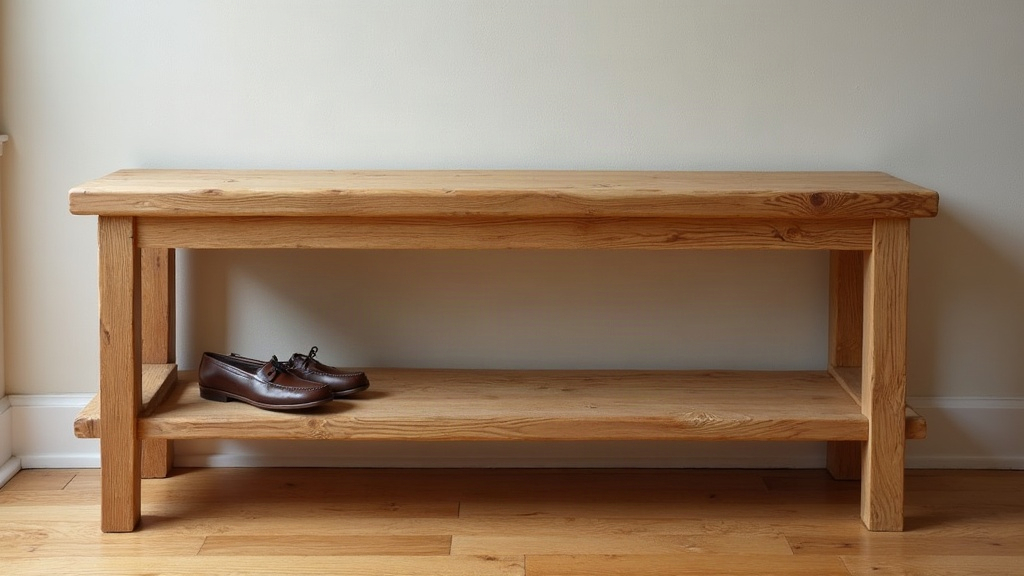
Quick Answer
- Hardwax oil (Rubio Monocoat, Osmo, Fiddes) is the better pick if you’re after a low-sheen, natural look and don’t mind spot-repairing scuffs every year or two.
- Water-based lacquer (General Finishes, Target Coatings, Minwax Polycrylic) wins if you want maximum scratch and moisture resistance with minimal upkeep, and you can live with a slightly more “finished,” plastic-ish surface.
How Each Finish Handles Daily Shoe Traffic
Hardwax Oil: Soft, Repairable, Shows Wear Gracefully
Hardwax oil soaks into the wood fibers instead of sitting on top as a film. Practically speaking:
- Scuffs blend in rather than chip or flake, since there’s no continuous film to crack in the first place.
- Grit and sand tracked in on shoes can burnish the surface over time, giving it a slightly duller patina. A lot of owners actually like that look on an entryway piece; it reads as lived-in, not neglected.
- Water rings from wet boots can happen if moisture sits for more than a few minutes, especially during the first month before the oil fully cures (curing usually takes 3-4 weeks).
- Repairs are simple: sand the worn spot lightly, wipe on a thin coat of oil, buff it out. No need to strip the whole bench.
The catch is that hardwax oil just doesn’t resist abrasion like a hard film finish does. Fine on a coffee table. On a bench getting scraped by boot heels every morning, plan on touching up the high-contact spots (the seat edge, the top where people perch to tie their laces) once or twice a year.
Water-Based Lacquer: Hard Shell, Better Barrier
Water-based lacquer builds an actual film on the surface, sort of like polyurethane but faster-drying and much lower odor. For entryway duty:
- Scratch resistance is noticeably higher. Grit under shoe soles tends to slide across the surface rather than dig into it.
- Moisture protection is better, too. It seals the wood, so wet boots and dripping umbrellas pose much less risk.
- Impact chipping is the real weak point. Drop a boot or a heavy bag on an edge and you can chip the film. Fixing that means blending new lacquer into the old coat, which is trickier than a quick oil touch-up.
- Sheen options run from matte to satin to gloss, and today’s matte water-based lacquers look far less “plasticky” than the older formulas people remember.
Look and Feel on White Oak
White oak has that prominent open grain and natural chatoyance, and each finish treats it differently:
- Hardwax oil deepens the grain, keeps the wood feeling warm under your hand, and won’t yellow with age (especially clear or raw formulas like Rubio’s Oil Plus 2C).
- Water-based lacquer stays crystal clear and never ambers, but it flattens the tactile, open-pore texture a bit since the film fills the grain, more so once you’re past two or three coats.
Want the bench to feel like solid wood under bare feet or hands? Hardwax oil is the more “authentic” route. Want it looking showroom-fresh five years from now? Lacquer holds that appearance longer.
Maintenance Reality Check
| Factor | Hardwax Oil | Water-Based Lacquer |
|---|---|---|
| Recoat interval | 1-2 years (high traffic) | 3-5+ years |
| Repair method | Spot sand + reapply | Full strip/refinish usually needed |
| Water resistance | Moderate | High |
| Scratch resistance | Moderate | High |
| Sheen | Matte/satin, natural | Matte to gloss, film-like |
| DIY reapplication | Very easy | Harder to blend |
Which Should You Choose?
- Go with hardwax oil if you like the idea of a finish that evolves over time and you’re fine doing a five-minute touch-up now and then.
- Go with water-based lacquer if the bench lives in a mudroom that sees heavy wet-weather traffic and you want something you can set and forget for several years.
Conclusion
There’s no single “better” finish for a white-oak entryway bench under daily shoe traffic, only a better fit for how you want to maintain it. Hardwax oil rewards owners who don’t mind the occasional spot repair in exchange for a warmer, more natural surface. Water-based lacquer rewards owners who want a tougher, more moisture-resistant shell and can accept a touch more of that synthetic sheen. Rainy entryway with lots of boots coming through? Lean lacquer. Want a piece that ages well and is easy to refresh by hand? Go hardwax oil.